|
Periods of Chinese History
|
 |
The Song empire 宋 (960-1279) covered a much smaller territory than the Han 漢 (206 BCE-220 CE), Tang 唐 (618-907) or Qing 清 (1644-1911) empires did. The
Northern Song dynasty reigned over China proper, except the northern parts, where
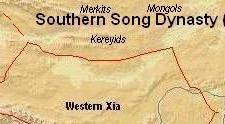
the proto-Mongolian Khitans had founded the Liao empire 遼 (907-1125), and the northwest, where the Tanguts ruled over the empire of Western Xia 西夏 (1038-1227).
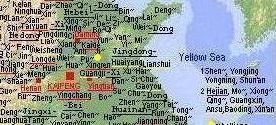
The Song empire had four capitals, with Kaifeng 開封 (modern Kaifeng, Henan) serving as the main capital:
The Capitals of the Northern Song Empire |
| capital |
prefecture |
modern place |
| Dongjing 東京 "Eastern Capital" |
Kaifeng 開封府 (Bianliang 汴梁, Bianjing 汴京) |
Kaifeng, Henan |
| Xijing 西京 "Western Capital" |
Henan 河南府 |
Luoyang 洛陽, Henan |
| Beijing 北京 "Northern Capital" |
Daming 大名府 |
Daming, Hebei |
| Nanjing 南京 "Southern Capital" |
Yingtian 應天府 |
Shangqiu 商邱, Henan |
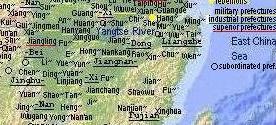
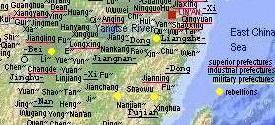
The largest administration unit of the Song empire was the circuit or "province" (lu
路). Below it, there were prefectures (zhou
州), some of them with superior status (fu 府, in
the map underlined red), some with the status of military prefectures (jun
軍, in the map underlined yellow), and some with the function of industrial
prefectures (jian 監, in the map underlined green).
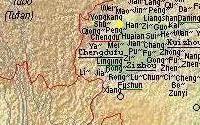
In the remote areas in the southwest, some prefectures had inferior
status (the circles in the map stand for a couple of such inferior
prefectures that were administered as parts of zhou prefectures).
The Circuits or Provinces (lu 路) of the Song Empire |
circuit
superior prefectures (fu 府) | modern location |
| Jingji 京畿路 | Henan |
Hebei-Dong 河北東路
Daming 大名府, Kaide
開德府, Hejian 河間府 | eastern Hebei |
Hebei-Xi 河北西路
Zhending 真定府,
Zhongshan 中山府, Xinde 信德府, Qingyuan 慶源府 | western Hebei |
Jingdong-Dong 京東東路
Jinan 濟南府 | eastern Shandong |
Jingdong-Xi 京東西路
Yingtian 應天府,
Gongqing 龔慶府, Xingren 興仁府, Dongping 東平府 | western Shandong |
Hedong 河東路
Taiyuan 太原府, Longde
隆德府, Pingyang 平陽府 | Shanxi |
Shaanxi 陜西路 (or Yongxinjun 永興軍路; from 1041 divided into: Qin-Feng 秦鳳路,
Jing-Yuan 涇原路, Huanqing 環慶路, Li-Yan 酈延路, and Xihe 熙河路)
Jingzhao 京兆府, Hezhong 河中府 | Shaanxi |
Lizhou 利州路 (later Lizhou-Xi 利州西路 and Lizhou-Dong 利州東路)
Xingyuan 興元府, later: Longqing 隆慶府, Tongqing 同慶府 | southwestern Shaanxi, northern Sichuan |
Jingxi-Bei 京西北路
Henan 河南府,
Yingchang 潁昌府, Huaining 淮寧府, Shunchang 順昌府 | northern Hebei, southern Henan |
Jingxi-Nan 京西南路
Xiangyang 襄陽府 | southern Hebei |
Jinghu-Bei 荊湖北路
Jiangling 江陵府,
Dean 德安府, later: Changde 常德府 | northern Hubei |
Jinghu-Nan 荊湖南路
| southern Hunan |
Chengdufu 成都府路
Chengdu 成都府, later: Chongqing 崇慶府, Jiading 嘉定府 | central Sichuan |
Zizhou 梓州路 (later Tongzhou 潼州路, then Tongchuanfu 潼川府路)
Tongchuan
潼川府, Suining 遂寧府 | southern Sichuan |
Kuizhou 夔州路
Chongqing 重慶府, Xianchun 咸淳府, Shaoqing 紹慶府 | western Hunan, Chongqing |
| Qian-Nan 黔南路 (from 1107) | Guizhou, southwestern Hunan |
Huainan-Dong 淮南東路 (later: Huai-Dong 淮東路)
Jiangning 江寧府 | northern Jiangsu |
Huainan-Xi 淮南西路 (later: Huai-Xi 淮西路)
Shouchun 壽春府, later: Anqing 安慶府 | southern Anhui |
Liang-Zhe 兩浙路 (later: Liang-Zhe-Xi 兩浙西路)
Pingjiang 平江府,
Zhenjiang 鎮江府, later: Lin'an 臨安府, Jiaxing 嘉興府, (all west), later: Shaoxing 紹興府, Qingyuan 慶元府, Ruian 瑞安府 (all east) | Zhejiang, Shanghai, southern Jiangsu |
Jiangnan-Dong 江南東路
Jiangning 江寧府 (=Jiankang 建康府), later: Ningguo 寧國府 | eastern Jiangxi, southern Anhui |
Jiangnan-Xi 江南西路
later: Longxing 隆興府 | western Jiangxi |
Fujian 福建路
later: Jianfu 建府 | Fujian |
Guangnan-Dong 廣難東路
Zhaoqing 肇慶府, later: Deqing 德慶府, Yingde 英德府 | Guangdong |
Guangnan-Xi 廣南西路
later: Jingjiang 靜江府, Qingyuan 慶遠府 | Guangxi, Hainan |
During the Northern Song period some internal rebellions and upheavals
occured, in the map shown by the big yellow dots. These were the
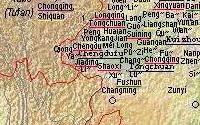
rebellions of Wang Xiaobo 王小波 and Li Shun 李順 in 993-995 in modern
Sichuan, the famous rebellion of the Liangshan Swamp 梁山泊 by Song Jiang
宋江 in 1119-1121 in the west of modern Shandong (see the novel Shuihuzhuan
水滸傳 "The Water
Margin"), and the rebellion of Fang La 方臘 in 1120 in modern Zhejiang.
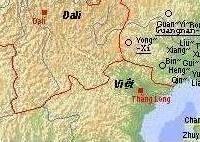
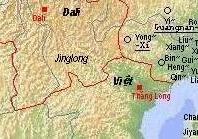
The neighbouring states of the Northern Song empire were Vietnam (Lý Dynasty
李), Dali
大理 in the region of modern Yunnan, and Jinglong 景曨
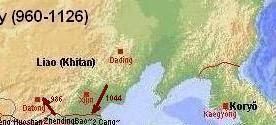
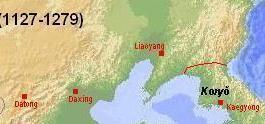
in the south, Korea (Koryŏ 高麗) was
governed by a house descendant of the old Silla Empire 新羅. The north
was occupied by the empire of Liao, the border to which was located south of modern
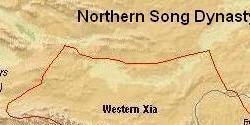
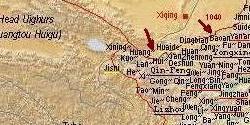
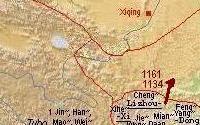
Beijing. The upper course of the Yellow River and the Gansu corridor
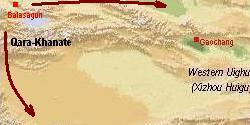
were controlled by the Tangutan empire of Western Xia. More to the
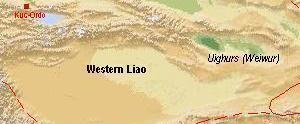
west, in modern Xinjiang, were the communities of the Western Uyghurs
(Xizhou Huigu 西州回鶻), the Yellow Head Uighurs 黃頭回鶻,
and the empire of the Qara Qans 黑汗 "Black Khans" that expanded into the
Tarim Basin and the Junggar Basin.
When
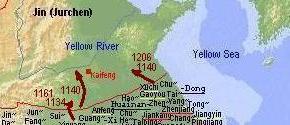
the Song court fled to the south in 1127, trying to escape the army of the
Jurchens that had founded the Jin empire
金 (1115-1234) in the north, they established a new capital in the lower Yangtze
area: Lin'an fu 臨安府 (Hangzhou 杭州, Zhejiang). During the 150
years of the Southern Song period there several military
campaigns were undertaken between Jin and Song China.
Like before, the largest administration unit of the Song empire was the
circuit (lu 路), but much of the territory was lost
to the Jurchens, and many prefectures were elevated to the
status of superior prefectures. Industrial prefectures were almost
given up.
For the first
time in Chinese history, not only peasants or religious
leaders undertook uprisings against the ruling dynasty, but under the
Southern Song, salt workers and tea traders rebelled. During the 1130es
and 1140es the whole southeast was permanently shaken by uprisings, the
most important being the rebellion of Zhong Xiang 鍾相 in 1130 around the
Dongting Lake 洞庭湖, modern Hunan, and that of Luo Shichuan 羅世傳 in 1208 in
the south of modern Jiangxi.
When the Jurchens conquered the Liao empire and the northern border prefectures of the Song empire,
part of the elite of the Liao dynasty fled to the west, where they founded the Western Liao empire
西遼 (1124-1218). In the early 13th century Činggis Qaɣan was able to unite the steppe tribes and to forge a
powerful federation that should conquer the empires of Western Liao, Jin
and Western Xia, and finally that of the Southern Song.
2000 ff. © Ulrich Theobald · Mail
|
|
|


